Key Takeaway
To compare two bulk quotations for insulated bottles, first have each supplier state which grade is used for the inner wall, the outer shell and every other metal part. Then align capacity, lid type, logo method, packaging, order quantity and what the unit price includes. A price gap alone does not show what changing the steel grade would cost.
A vacuum-insulated bottle has two steel walls, and they do not have to be the same grade. The inner wall holds the drink. The outer shell carries the color, the logo and the knocks of daily use. The factory can specify each one separately, so a quotation line reading 304 bottle leaves you guessing whether the supplier means the inner wall, both walls, or every metal part including the handle. On our own S7206V-24oz and S4807V-16oz bottles, the inner wall is 304 stainless steel and the outer shell is 201 stainless steel.
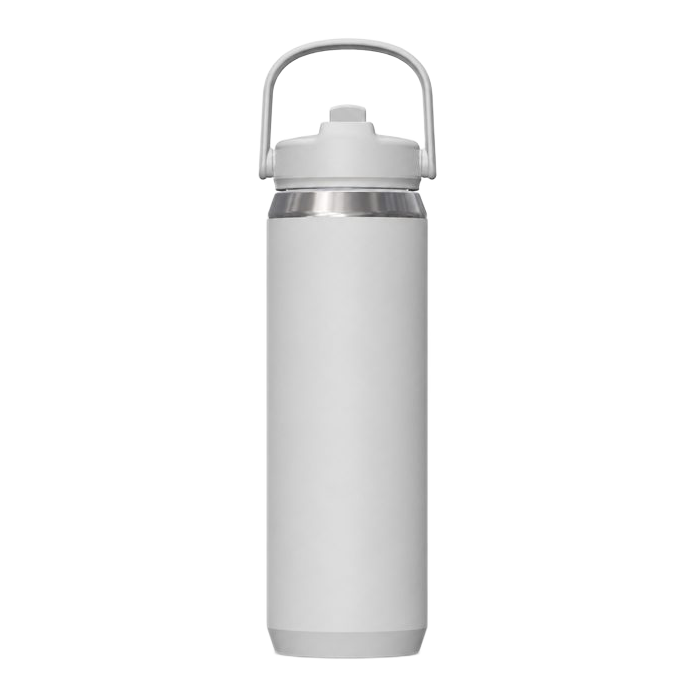
Which wall does the grade describe
Ask about the inner wall first, because that is the wall the drink touches. Then ask about the outer shell, which carries the finish and the logo. Then ask about any other metal part by name: the handle, a loop, a lid ring or a mount. The main lid, straw and seal ring are usually plastic or silicone, and they need naming too, because a quotation that lists only steel can call a bottle stainless steel without describing the parts a user drinks through.
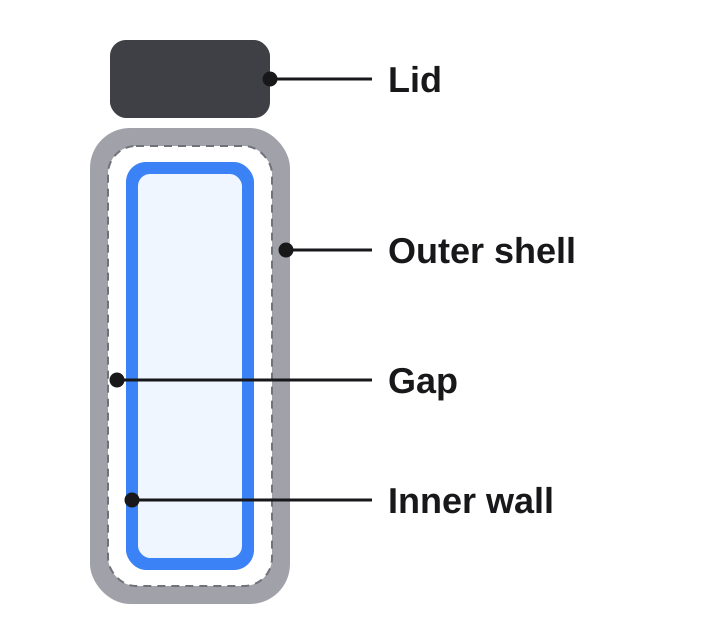
The table below is how we read a material line part by part. The middle column is what a stated grade declares. The right column is what the same line leaves open, which is where your questions go.
| Part to check | What a stated material declares | What still needs confirming |
|---|---|---|
| Inner wall | The grade specified for the drink-contact wall | Wall thickness, and how the grade is evidenced for your order |
| Outer shell | The grade specified for the painted or printed outside | Whether another shell grade is available for that model, and what it changes |
| Handle, loop or ring | The material specified for that one part, which can differ from the walls | Whether it is the part fitted on the model and version being quoted |
| Main lid | The polymer type named by the factory, such as PP | Lid design, closure behaviour and the documents covering it |
| Straw and seal | The materials specified for two parts that contact the drink | Whether they are included in the quoted configuration |
| Grade label alone | The alloy specified in the purchase document | Insulation, compliance and service life, which need their own evidence |
Read the right column as a question list, not as a verdict on either grade. Neither name settles whether a bottle is safe for your market or how long it holds temperature. The table is not a ranking either: 201 on an outer shell, on its own, is not evidence of a defect, and 304 on an inner wall is not a guarantee about the assembled product. Both still have to be judged against the purchasing standard you are buying to.
Ask for the answers part by part, because the material description you receive is the one that travels into your purchase order, your product listing and your import paperwork, where it is read by people who were not in the conversation. A line reading 304 stainless steel bottle can be read as a claim about the whole product, including parts a customer can touch. A line reading 304 inner wall, 201 outer shell, zinc alloy handle is specific about each part, and it is no harder for a supplier to write.
Keep the answer in writing, in the same field names you will use later. A written line can be pasted into your specification and checked against the next quotation; a figure recalled from a call cannot.
If you have not settled on a bottle shape yet, start from the stainless steel water bottle range and pick two or three models to ask about. Naming the model gives the supplier a specific specification to check, which is easier to compare than a general statement about what a supplier can do.
Reading two quotations that both say 304
Here is a hypothetical pair, written to show the method rather than to report an order. Supplier A quotes a bottle and writes 304 stainless steel. Supplier B quotes a similar bottle and writes 304 inner wall, 201 outer shell. B's line looks like the lower specification, so A looks like the safer buy. That reading is not available yet, because A has not said what its 304 covers.
Ask both to split the line, then sort each field into one of three states, and treat each state as a different next step rather than a score.
Matched means both suppliers have declared the same thing for that field. Move on to the other fields, and to the evidence: a shared declaration is still a declaration, so the material documents and how they relate to your order remain to be checked on both sides.
Different means the declarations differ. Check each one against your own requirement. If a mandatory requirement is not met by what has been quoted, ask that supplier whether a compliant alternative is available for the model, and what it changes in the specification and the price. If the difference is between two options your brief allows, keep both and evaluate them separately.
Unconfirmed means no answer has arrived. Mark the cell To confirm and ask that one question again on its own, so the open item stays visible rather than looking like an oversight.
Now run the scenario. Suppose A comes back with 304 inner wall and 201 outer shell. The wall grades are matched, so that field no longer separates the two quotations. It does not make the bottles equivalent and it does not explain the price: wall thickness, how much steel each design uses, each supplier's own purchasing cost, dimensions, lid design, manufacturing and the charge inclusions can all still differ. A difference between two suppliers cannot isolate the effect of the wall material, so the next step is to fill in those remaining fields on both sides rather than to ask either supplier to account for the other's price.
Suppose instead A confirms 304 on both walls. That field is different, and your next step depends on your own standard. If your contract requires 304 on both steel walls, B's quoted wall configuration does not meet that requirement as quoted, so ask B whether a compliant alternative is available for that model and what it changes. Write the requirement per part while you are at it, because a phrase like 304 throughout cannot apply to a PP lid, a PE straw or a silicone seal. If your specification accepts a 201 shell, you have two different configurations quoted, both satisfying the wall-grade part of that brief, and a price difference between them may reflect differences beyond the wall grades.
Suppose A simply repeats stainless steel, or answers about the inner wall and ignores the shell. That field is unconfirmed. Mark it To confirm and repeat that question by itself. Without it you cannot write accurate product copy, and the gap does not close on its own once an order is placed.
The three states matter because they lead to different work: more fields and evidence, a decision against your requirement, or one more question. Sorting them first is what keeps a comparison from collapsing into a single impression that one quotation looks better, which is where this scenario started.
If what you want to know is what the shell grade is worth on a finished bottle, a comparison between two suppliers will not isolate it. Ask one supplier to quote the same model twice, with every other field held to the agreed configuration, for the wall combinations they can actually supply. Even then the gap is a difference between two finished-product offers from that supplier, not a raw steel price and not a discount to carry elsewhere.
Three briefs show how differently the same two grades can play out. These are different purchasing requirements, not a ranking of safety or quality.
With a brief that already specifies a 304 inner wall and a 201 outer shell, you are screening quoted configurations against a known target. A quotation stating exactly that is matched on the walls, so your questions go to thickness, the handle, the lid parts and the charge inclusions. If a supplier offers 304 on both walls instead, record it as a separately specified alternative rather than treating it as the same quotation, since it is a different configuration with its own price.
With a customer contract requiring 304 on both steel walls, availability comes before price. Ask each supplier whether that configuration can be supplied for the model you want, what it changes in the specification, and what it does to the quotation. Record a no as a no for that model, rather than as a limit on the supplier generally.
With a brief that says nothing about the outer shell, you have a decision rather than a field to match. Ask each supplier to quote the configuration they build as standard for that model, keep both answers, and compare them with the rest of the sheet aligned. Before accepting different shells from different suppliers, assess whether each configuration meets your intended use and the product evidence you need, then record and describe each one accurately.
A quote comparison sheet you can copy
Copy the field column into your quotation request and send it to each supplier, then fill their answers into their own column. Where a supplier has not answered, write To confirm rather than filling in what you expect.
| Field to confirm | Supplier A | Supplier B |
|---|---|---|
| Model / reference and version | To confirm | To confirm |
| Inner wall grade | To confirm | To confirm |
| Outer shell grade | To confirm | To confirm |
| Other metal parts (handle, loop, ring) | To confirm | To confirm |
| Lid, straw and seal materials | To confirm | To confirm |
| Capacity, stated with unit | To confirm | To confirm |
| Lid type and closure | To confirm | To confirm |
| Exterior finish and color standard | To confirm | To confirm |
| Logo method, size and positions | To confirm | To confirm |
| Packaging (inner and export carton) | To confirm | To confirm |
| Order quantity the price applies to | To confirm | To confirm |
| Quantity split per model and color | To confirm | To confirm |
| Trade term and destination | To confirm | To confirm |
| Included in unit price | To confirm | To confirm |
| One-off or separate charges | To confirm | To confirm |
| Currency, quotation date and validity | To confirm | To confirm |
| Material documents offered | To confirm | To confirm |
| Sample configuration and charges | To confirm | To confirm |
When quotations describe different configurations, first decide which differences need aligning. Take the common mismatches one at a time.
If the two offers are for different capacities, do not scale a price by volume. Pick the capacity you intend to buy, state it as a number with its unit, and ask both suppliers to quote that size. Where a supplier's record uses a different unit from yours, ask them to confirm the capacity in the unit they record and say how it is measured, rather than converting it yourself.
If the lids differ, name the closure you want: straw lid, direct-drink, flip or screw. A lid changes tooling, parts and assembly, so two lid types are two products and the price difference between them is not information about steel.
If one quotation includes a one-position logo and the other a two-position logo, decide the artwork and positions first, then ask both to quote that. Logo size, method and the number of positions all belong in the request, because a supplier filling them in differently is answering a different question.
If one price includes a printed color box and the other a polybag, choose the packaging you will ship and ask for it in both columns. Then ask separately what the alternative would cost, if you want that option on record.
Quantity needs the same treatment, including how it splits. Two quotations can show the same total and assume different splits across models and colors, and each supplier's assumption affects how they price it. State the split you intend in the request so both are quoting the same thing, and ask each to confirm the split their price assumes.
Charge inclusions are where double counting creeps in. Logo setup, printing screens, color matching, packaging artwork or dies, sample units and freight can each sit inside the unit price, appear as a one-off charge, be billed separately, or not be offered. None of those is a given in either direction, so ask per line which applies and write To confirm where the quotation is silent. Then compare the unit prices against each other, and the one-off and separate charges against each other, instead of mixing the two.
The remaining commercial rows are quick to confirm and easy to skip. Trade term and destination decide whether you are reading a factory-gate or a delivered number. Currency and validity decide whether the price is still live when your own approval comes through. Material documents offered is worth a specific question rather than a yes: ask what each document covers and how it relates to your order, since a record for a steel coil and a record for your production run are different things.
Once both columns are filled, count the To confirm cells before comparing any numbers. Then check the fields marked different against your requirement, separating the ones that disqualify an offer from the ones that are simply options. Compare prices last, and only for the quantity and trade term both columns now share. If the offers still differ on configuration, ask each supplier to requote against the single configuration you want, and keep the earlier columns as they were rather than editing them into agreement.
Logo, color and packaging also move a unit price on an existing bottle body. If you are branding one of our existing models, the ODM route for our existing bottle models covers how logo, color and packaging are applied to a model that is already defined, which is where those cost lines come from. If what you need is a new body or a new internal structure rather than new branding, that is OEM development of a new design, and the material fields are set during that development instead of being read off an existing record.
Two of our own models, side by side
Our two bottles are useful here because their records name each part, and the parts are not identical. They are not evidence about any other factory's bottles.
| Field | S7206V-24oz | S4807V-16oz |
|---|---|---|
| Capacity as recorded | 720 mL actual capacity | 16 oz as listed |
| Product size | 85 × 90 × 263 mm | 78 × 78 × 195 mm |
| Inner wall | 304 stainless steel | 304 stainless steel |
| Outer shell | 201 stainless steel | 201 stainless steel |
| Handle | 304 stainless steel | Zinc alloy |
| Main lid | PP | PP |
| Straw | PE | PE |
| Seal ring | Silicone | Silicone |
| Wall thickness, net weight | Not listed | Not listed |
The shell and handle rows are the ones to carry into your sheet. Both bottles pair a 304 inner wall with a 201 outer shell, and the handles still differ: 304 stainless steel on one model, zinc alloy on the other. Matching wall grades are therefore not a reason to copy a whole specification from one model to another. Capacity, dimensions and the handle all change with the model, so each model needs its own set of material lines, even within one factory's range.
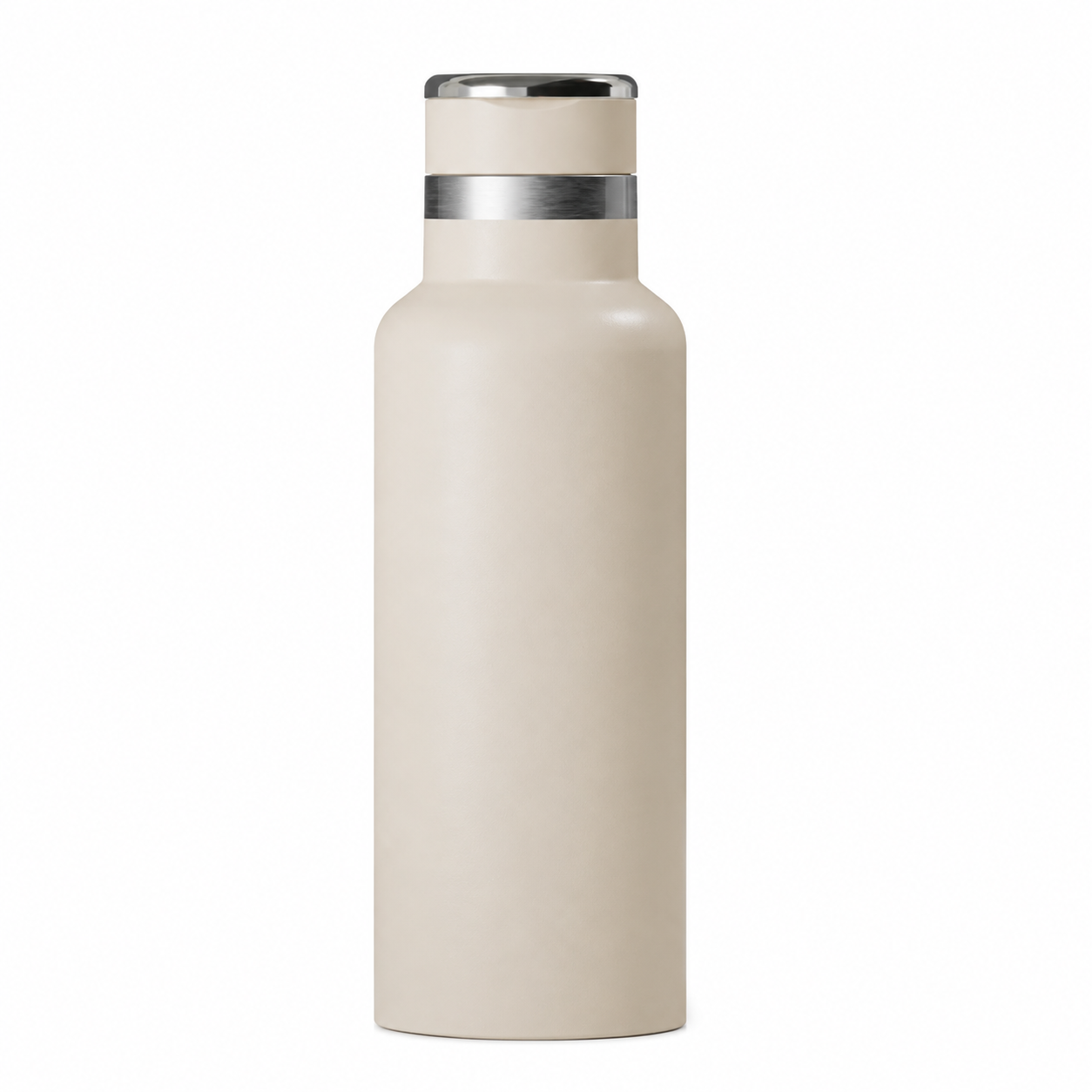
The capacity rows show why the unit matters. One model is recorded with an actual capacity of 720 mL; the other is listed as 16 oz, and we do not publish a millilitre figure for it because the record does not state one. When you compare bottles across suppliers, ask for the capacity in the unit the supplier records, and ask how it is measured, instead of converting a model code into a volume.
This table also cannot price a grade. The models differ in capacity, dimensions and handle material, so comparing them cannot isolate the cost of changing one steel grade. Wall thickness and net weight stay Not listed because those fields are not in the records; treat them as items to confirm for a specific inquiry.
When you quote these fields back to us, name the model and ask us to confirm them against your order. A record describes a model as built, while your order can change color, logo and packaging, and a different lid or handle on a later version would change the lines you copied.
Both models are from our own stainless steel range. If you want the background on which products we make in our own factory and which come from partner suppliers, our article on what Quanhu manufactures sets out that scope.
Asking for a comparable quotation
Write the questions so they can be answered field by field. Instead of asking what material the bottle is, ask for the inner wall grade and the outer shell grade separately for the model being quoted. Instead of asking whether the logo is included, ask which method, at what size, in how many positions, and whether the setup sits in the unit price or is charged once.
The message below is a template to fill in and send. Replace the bracketed parts with your own details and delete anything that does not apply.
Hello,
We are comparing quotations for insulated stainless steel bottles and would like your offer for [model or reference, or a link to the product].
Our planned order is [quantity] pieces to [destination country], split as [quantity per model and color], and we would like the price on [trade term].
Please confirm the material of each part separately: inner wall, outer shell, handle or any other metal part, main lid, straw and seal ring. Our requirement is [your material requirement, for example 304 on the drink-contact inner wall].
Please also confirm the actual capacity with its unit and how it is measured, the lid type, the exterior color standard, the logo method with size and number of positions, and the inner and export packaging.
On the price, please tell us which of these items are included in the unit price and which are one-off or separate charges, and state the currency, the quotation date and how long the price is valid.
Please confirm what material documents you can provide and what each one covers, and the sample configuration and charges if we move ahead.
If any configuration we have asked for is not available for this model, please tell us instead of quoting an alternative.
Thank you,
[your name and company]
If your own product standard requires a particular construction, put it in that first message rather than after the quotation arrives. A requirement for 304 on both walls changes which models can be quoted, and for any model, ours included, availability and its effect on the price have to come back from the supplier for that model and order.
The decoration options we can discuss for these two models are laser engraving or silk-screen printing for the logo, Pantone color matching for the exterior and a custom color box for packaging. Treat them as options to confirm per order rather than inclusions, and ask for each to be priced at the quantity you actually intend to place, since an option quoted at one quantity tells you little about another.
Keep inner wall and outer shell separate in every language your team works in. A short translation can turn a 304 inner wall into a 304 bottle, and a listing written from that version would overstate what was bought.
When answers come back, put each one in its field with the date and the document or message it came from. Then send one short reply listing only what is still To confirm. If two answers disagree, quote both and ask which one applies to the order.
What makes a material answer usable is the document behind it: which part and model it covers, which version it is, and whether it matches the order being placed. Ask for that rather than relying on who in the chain repeated the figure.
What the grade names actually mean
With the material lines clear, the grades themselves are worth a look, because they explain why the two names are not interchangeable and why neither settles performance.
201 and 304 are different stainless steel grades with different alloy content. The ranges below come from the composition table published by thyssenkrupp Materials UK for the EN designations 1.4301 and 1.4372. Read them as that supplier's reference ranges for the EN grades. They are not measurements of any bottle, including ours, and ASTM, JIS and GB standards set their own limits for similarly named grades.
| Grade (EN number) | Chromium | Nickel | Manganese |
|---|---|---|---|
| 304 (1.4301) | 17.5–19.5% | 8.0–10.5% | 2.00% max. |
| 201 (1.4372) | 16.0–18.0% | 3.5–5.5% | 5.5–7.5% |
The 201 entry carries less nickel and more manganese than the 304 entry, which is why the two names mean different things in a specification. It is not a test result for any part, and it does not produce a price difference between two finished bottles; that still comes from the quotations.
Steel grade alone also does not establish insulation performance. The vacuum between the walls, the lid and the finished construction matter as well. Compliance depends on the rules of your destination market and on documents for the specific product and its parts. Service life depends on use, cleaning and how well the whole bottle is built.
Corrosion shows why a grade is not a promise. Outokumpu, a stainless steel producer, explains that stainless steels are often chosen for corrosion resistance but are not immune to corrosion. Performance depends on composition and environment, and also on surface finish, product design, fabrication method, contamination and maintenance. So a 304 line in a quotation does not promise a bottle that never marks, and a 201 outer shell does not predict one that will.
What a sample settles and what it does not
A sample answers the questions you can see and handle: color against your brand reference, finish, logo position and quality, how the lid opens and closes, whether the straw and seal arrangement matches what you asked for, the height, and capacity at an agreed fill level. Check as well that the sample was built to the configuration in the quotation, because a sample from a different specification cannot answer questions about the quoted one.
Handling or looking at a sample does not identify the steel grade. ASSDA explains that appearance is not a reliable indicator of grade, and that cold working can affect the magnetic response of both 200-series and 300-series austenitic stainless steels. A magnet test and a look at the surface therefore cannot settle a 201-versus-304 question, whichever way they come out. A stamped 304 mark has the same limit: it records what the maker intends the part to be.
Grade evidence comes from documents and, where a program requires it, from laboratory testing of a sample. Material evidence and functional evidence answer different questions, and neither substitutes for the other. A material record tells you what a part is specified or tested to be; it does not tell you how the assembled bottle performs, which needs its own finished-product testing.
Material evidence also has to be component-specific. A report on the inner wall says nothing about the outer shell, and neither covers the handle, lid, straw or seal. Ask what record the supplier holds for the inner wall and for the outer shell of the model you are buying, and how each one relates to the material that will be used for your order. A certificate for a steel coil only helps if it can be tied to your bottles.
If independent verification is part of your requirement, agree the specific question with a competent testing provider first: which component is being checked, and what decision the result has to support. Agree with the supplier how samples are selected and labelled, and keep the report with the sample it came from.
Label each sample with the supplier, model, configuration and the date it arrived, and keep that label with any photographs. When several bottles are in review at once, the label is what ties a comment about one lid or finish to the right bottle, and it gives you a reference to quote when you go back with a question.
Keep three kinds of entry apart in whatever record you use: what the sample showed, what the documents cover, and what is still To confirm. A sample that looks right does not close a material question, and a certificate does not close an appearance question.
Your next step
Send us the model you are comparing, or pick two or three from our range, and include the quantity the price should apply to, the destination country, the lid and decoration you want, and the material fields your program requires. If your standard needs a specific grade combination, say so in that first message.
We will reply with what the model's record lists, which fields stay open until they are confirmed for your order, which items sit in the unit price and which would be quoted separately, and what we can supply for that model at your quantity. Where something needs the factory to confirm it, we will say so rather than filling it in. You can then put our answers next to the other quotation, field by field, in the sheet above.
Frequently Asked Questions
Two quotations both say 304 stainless steel. Why can't I compare them directly?
Because 304 alone does not say which part it describes: the inner wall, both walls, or every metal part. Ask each supplier to state the inner wall and outer shell grades separately, then sort each field into matched, different or unconfirmed as set out in reading two quotations.
Which fields do I need before comparing bulk prices?
The material of each part, then capacity, lid, finish, logo, packaging, quantity and its split, trade term, what the unit price includes, and the quotation validity. The full list is in the comparison sheet, which you can copy into your own request.
Which costs should be shown separately from the unit price?
Logo setup, printing screens, color matching, packaging artwork or dies, sample units and freight. Each may sit inside the unit price, be charged once, be billed separately, or not be offered. Ask per line, mark anything unanswered To confirm, and compare unit prices and one-off charges separately.
How can I tell what the outer shell grade is worth on a finished bottle?
A comparison between two suppliers will not isolate it, since their manufacturing, purchasing and pricing differ too. Ask one supplier to quote the same model twice with every other field unchanged, for the wall combinations they can supply. The gap is a difference between two finished-product offers, not a steel price.
Can one insulated bottle use both 201 and 304 stainless steel?
Yes. Our S7206V-24oz and S4807V-16oz are both recorded with a 304 stainless steel inner wall and a 201 stainless steel outer shell. The two grades describe different parts of the same bottle.
Are the other metal parts on these bottles also 304?
No. S7206V-24oz has a 304 stainless steel handle and S4807V-16oz a zinc alloy handle, as listed in the model comparison. Read each part from the record for that model rather than from the wall materials.
Can I tell 201 from 304 with a magnet or by eye?
Neither works on its own. Surface treatments change appearance, and cold working can affect magnetic response in both 200-series and 300-series austenitic stainless steels. Ask which material record covers the inner wall and the outer shell of your model, and discuss any independent verification with a competent testing provider.
Can I order either model with a 304 outer shell?
The records for these two models specify a 201 outer shell. Availability of another wall combination has to be confirmed for the model and the order, along with what it changes in the quotation, so state the requirement in your first message.
About the author